THE PHONE BOX AT THE EDGE OF THE WORLD REVIEW
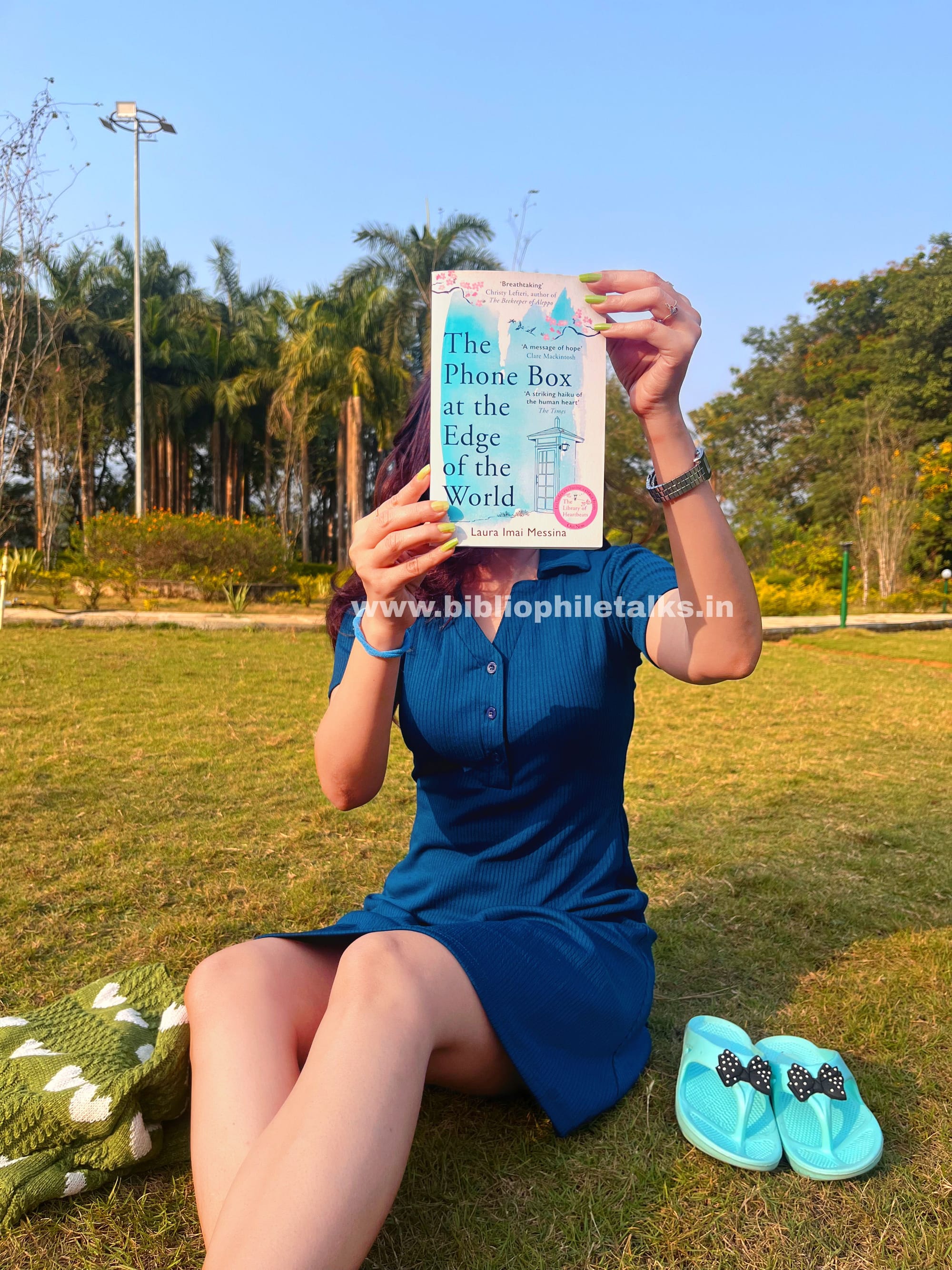
The Phone Box at the Edge of the World
By Laura Imai Messina
Publisher: Manilla Press
Paperback: 416
Published: 31st March 2021
Genre: Contemporary Fiction
Western Writing
Reading Year: 2026
The Phone Box at the Edge of the World immediately caught my attention with its fascinating, emotionally powerful premise: a phone box that lets people speak to loved ones who have passed away. The story follows Yui, who loses both her mother and young daughter in the devastating tsunami that struck Japan on March 11, 2011. Her grief and struggle to find a way forward form the book's emotional heart.
Yui works at a radio station and learns about a phone box located in a garden on a hill in Bell Gardia, where people come to speak to the departed. The idea that the wind can carry their words to those they have lost is beautiful and deeply moving. Although Yui is drawn to the phone box, she never actually steps inside.
There, she meets Takeshi, a surgeon who has also experienced a devastating loss. After losing his wife, he is left to care for his three-year-old daughter, Hana, who has stopped speaking. Takeshi uses the phone to talk to his late wife about his life and his plans for their daughter.
Yui and Takeshi begin meeting at Bell Gardia once a month. Their meetings gradually turn into conversations, shared lunches, and eventually regular messages when they return to Tokyo. Slowly, a tender relationship develops between them. However, their growing connection is complicated by grief, guilt, and the fear that moving forward might somehow mean betraying the people they have lost. Yui also becomes attached to Hana, whose presence constantly reminds her of the daughter she lost.
I also appreciated the book's unusual structure. The main chapters are interspersed with short, fragmented sections containing memories and seemingly small details—a receipt for a picture frame, descriptions of objects, lists of memories, details about what Yui’s mother and daughter were wearing on the morning of the tsunami, and even Yui’s favourite Brazilian songs. These fragments add another layer to the characters’ memories and grief.
However, despite the intriguing premise, the book unfortunately did not work for me. The biggest issue was the pacing. The concept is undoubtedly interesting, but I felt there wasn’t enough story to sustain more than 400 pages. I kept waiting for the narrative to develop further, but the pace felt extremely slow, and I gradually lost interest.
Another major problem for me was the writing style, or the translation. At several points, the prose felt confusing and hard to follow. Instead of drawing me deeper into the characters’ emotions, it created distance and made it harder to connect with what was happening. I tried several times to continue reading, hoping the story would eventually pull me in, but I couldn’t regain my interest. I finally stopped reading around page 150.
I also struggled to connect with the characters. Although their circumstances are heartbreaking, I didn’t develop the emotional connection I had expected from a story centred around grief and loss. The overall tone also felt quite depressing, which made it harder for me to keep reading.
The premise had so much potential, and I genuinely wanted to see where Yui and Takeshi’s journey would lead. Unfortunately, the slow pacing, confusing writing/translation, lack of a compelling narrative progression, and my inability to connect with the characters ultimately made this a DNF for me.
Would I recommend it? Unfortunately, no. While the concept is beautiful and could be deeply moving, my reading experience wasn't engaging enough for me to recommend the book.
My Rating: 1.5/5
NOTE: In this blog, the CONTENT and PICTURES are owned by Samayra Singh and cannot be used or distributed without permission. Strict legal action will be taken against any infringement.