MY FAVOURITE VILLAIN
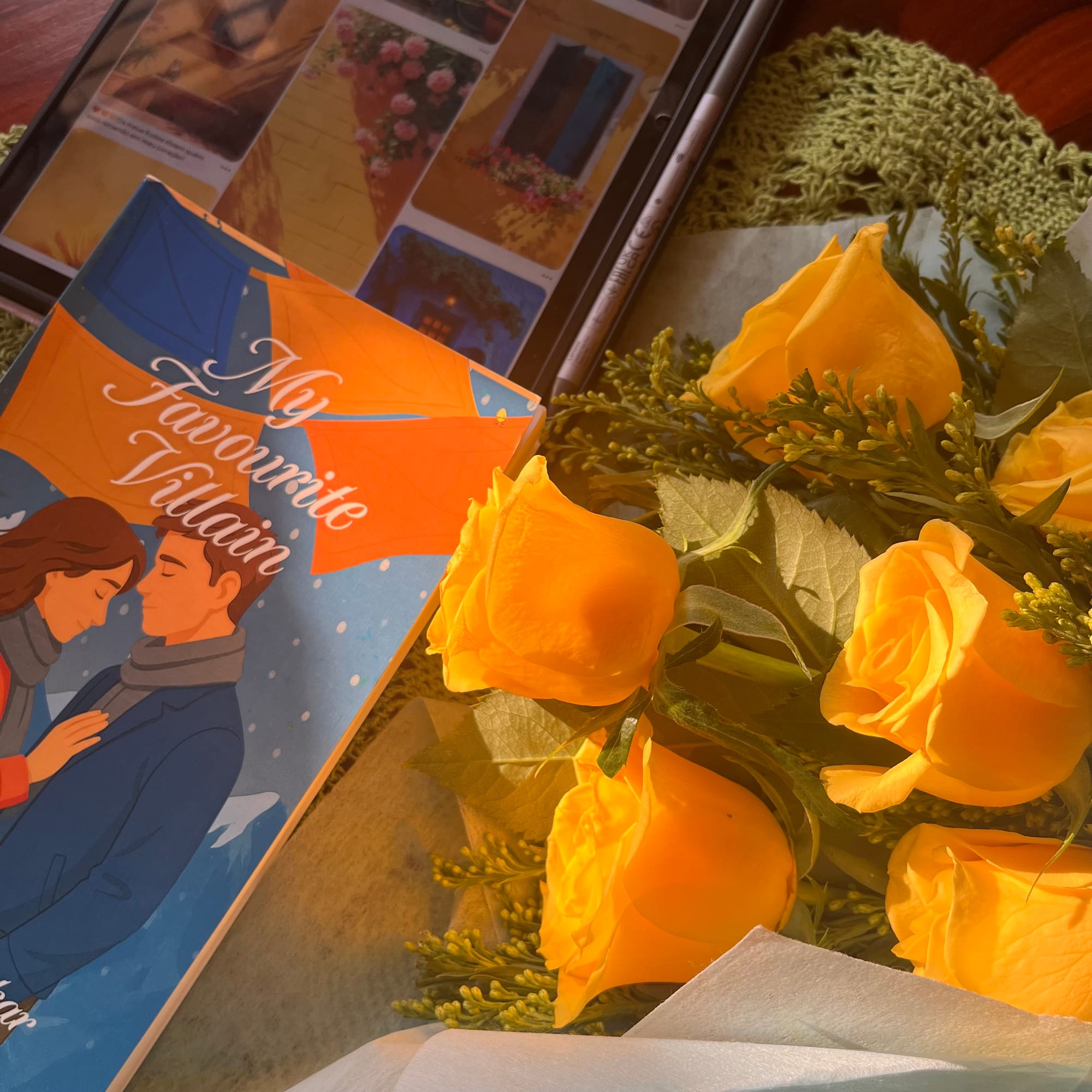
𝗠𝘆 𝗙𝗮𝘃𝗼𝘂𝗿𝗶𝘁𝗲 𝗩𝗶𝗹𝗹𝗮𝗶𝗻
𝗕𝘆 𝗔𝗿𝗰𝗵𝗮𝗻 𝗧𝗵𝗮𝗸𝗮𝗿
𝗣𝘂𝗯𝗹𝗶𝘀𝗵𝗲𝗿: 𝗛𝗮𝘁𝗰𝗵𝗲𝗴𝗴 𝗣𝘂𝗯𝗹𝗶𝗰𝗮𝘁𝗶𝗼𝗺
𝗣𝗮𝗽𝗲𝗿𝗯𝗮𝗰𝗸: 𝟏𝟕𝟓
𝗣𝘂𝗯𝗹𝗶𝘀𝗵𝗲𝗱: 𝟏𝟒𝐭𝐡 𝗦𝗲𝗽𝘁𝗲𝗺𝗯𝗲𝗿 𝟐𝟎𝟐𝟓
𝗚𝗲𝗻𝗿𝗲: 𝐂𝐨𝐧𝐭𝐞𝐦𝐩𝐨𝐫𝐚𝐫𝐲 𝗙𝗶𝗰𝘁𝗶𝗼𝗻
𝗜𝗻𝗱𝗶𝗮𝗻 𝗪𝗿𝗶𝘁𝗶𝗻𝗴
𝗥𝗲𝗮𝗱𝗶𝗻𝗴 𝗬𝗲𝗮𝗿: 𝟐𝟎𝟐𝟔
This is a story about two people who stand at opposite ends of the emotional spectrum. It is not a conventional love story; rather, it is a story of meeting, connection, and quiet contradictions. Two individuals, shaped by their pasts, cross paths and attempt to walk together—sometimes hand in hand, sometimes slightly out of step. Love arrives, but not simultaneously, and therein lies the heart of the narrative. The story follows Aalekh and Swara, who first meet during the induction program at Sky Blue Pvt. Ltd. Aalekh is instantly drawn to Swara’s quiet yet impactful charm. He is someone who believes in roots, stability, and permanence. Swara, on the other hand, is a free spirit—a “no-strings-attached” kind of person, a wind girl with no baggage, no map, only movement. Both are right in their own ways, yet their differences make their journey together complicated. Does the wind ever choose a home, or does the one who seeks permanence eventually learn the art of letting go?
The language is simple, accessible, and fluid. The narration leans heavily into metaphor, making the reading experience both immersive and reflective. With only 174 pages, you can finish the book within a day or two. The character development is good, despite the limited number of characters, but whoever they were, they played their roles effectively. The book also contains philosophical reflections. There are numerous lines worth underlining, moments that invite you to pause and think. It is the kind of book best read with a pen in hand.
I have rated this book 4.5 stars. While I initially considered a lower rating, the additional star is for the author’s unapologetically desi storytelling. It is something I often find missing in Indian fiction. The book is alive with local markets, Indian culture, and familiar food—not glossy cafés, fancy coffees, or impersonal urban aesthetics. As an avid reader of Japanese, Korean, and Southeast Asian literature, I really appreciate how those cultures proudly weave their traditions into their stories. This book does the same, and that sets it apart. Although fictional, the narrative remains grounded and believable. Yes, there are a few minor loopholes, but they are subtle enough not to disrupt the reading experience.
There is a line in Chapter Three that beautifully captures the soul of the book: “I remember steel babbas, ghee marks on lids, and the steam rising like a blessing when you open the box. Lunch is memory. Culture. Comfort wrapped in foil and folded in love.” That is what I referred to earlier, instead of leaning into trendy food imagery—burrito bowls, avocado salads, or croissants—the author consciously chooses desi comforts: simple chai with samosas, thepla paired with achar. It is these choices that make the story feel intimate, familiar, and deeply nostalgic, grounding it in lived experience rather than curated aesthetics.
A story that reminds us we do not have to hold on to people forever, even when they matter very much. It speaks to the quiet courage it takes to let go and learn to release without resentment. At its heart, it explores the idea that we do not need to lose ourselves in the effort of keeping someone in our lives. Sometimes, healing begins only when we allow ourselves to step back and rediscover who we are. Healing, in its most authentic form, is natural—it comes from returning to oneself. There are moments when distancing ourselves from the echoes of our past and reconnecting with nature becomes not an escape, but a necessity. For the peace of our minds, perhaps the first step is acceptance: letting go and choosing to be in relationships without the weight of expectations.
Would I recommend this book? Yes. The simple language makes it suitable even for novice readers. Its length makes it an ideal short or travel read. Readers who enjoy metaphorical and philosophical writing will find much to appreciate in this work. However, those looking for fast-paced adventure, intense romance, or high drama may want to skip this one. It is a slow-burn, reflective read—one that asks you to pause, think, underline passages, and occasionally drift into a Spiti Valley–like state of quiet contemplation.
P.S. I read the author’s first book nearly five years ago, and returning to their work with this novel has been a rewarding experience. There is a noticeable evolution in the writing—the style feels more refined, the narration more assured, and the overall storytelling carries a sense of maturity that comes with time and experience. While the earlier work was certainly commendable in its own right, this book reflects clear growth. Such progression is rare.
My Rating:
4.5/5
NOTE: In this blog, the CONTENT and PICTURES are owned by Samayra Singh and cannot be used or distributed without permission. Strict legal action will be taken against any infringement.