Author Interview: Irvin Embalsado
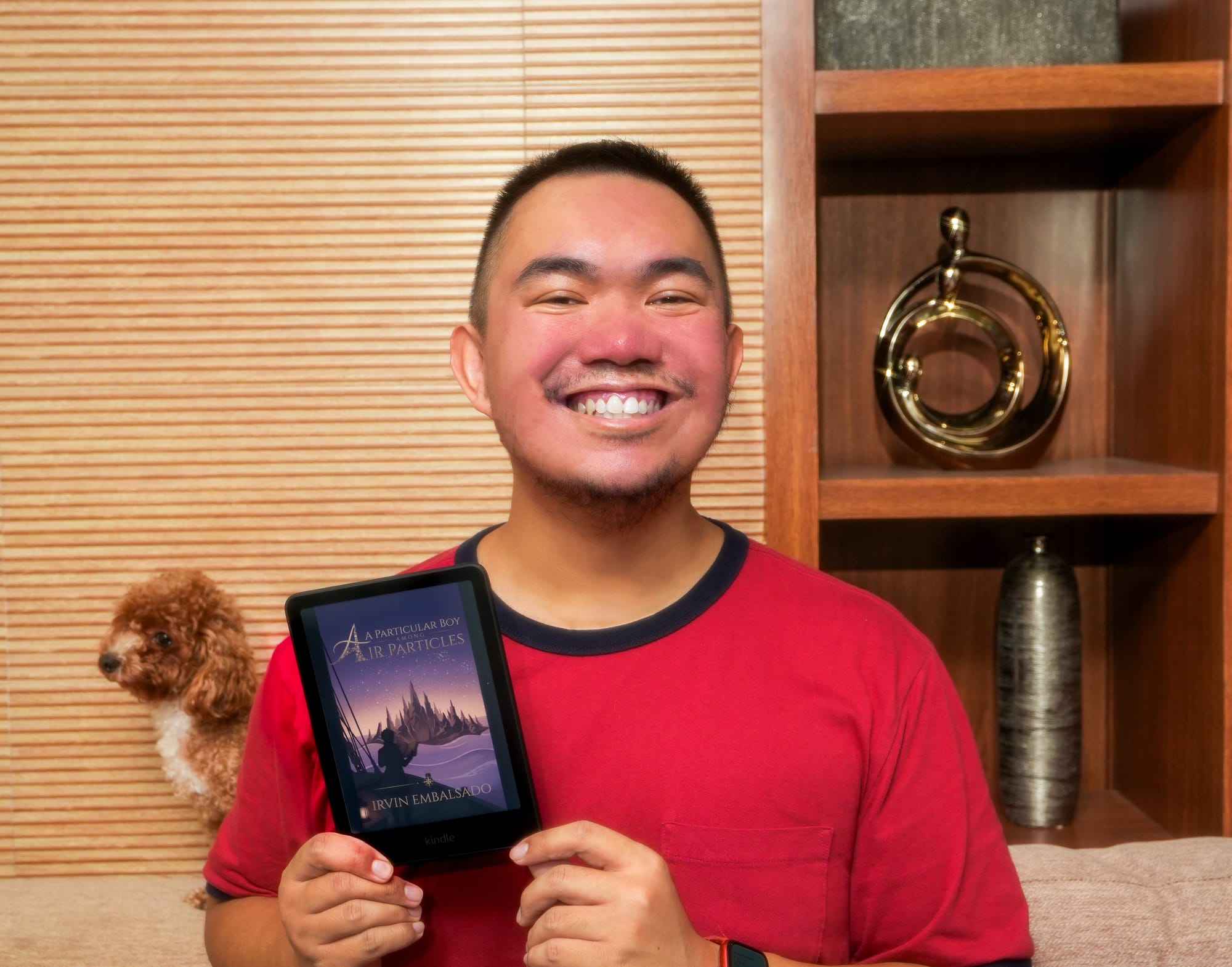
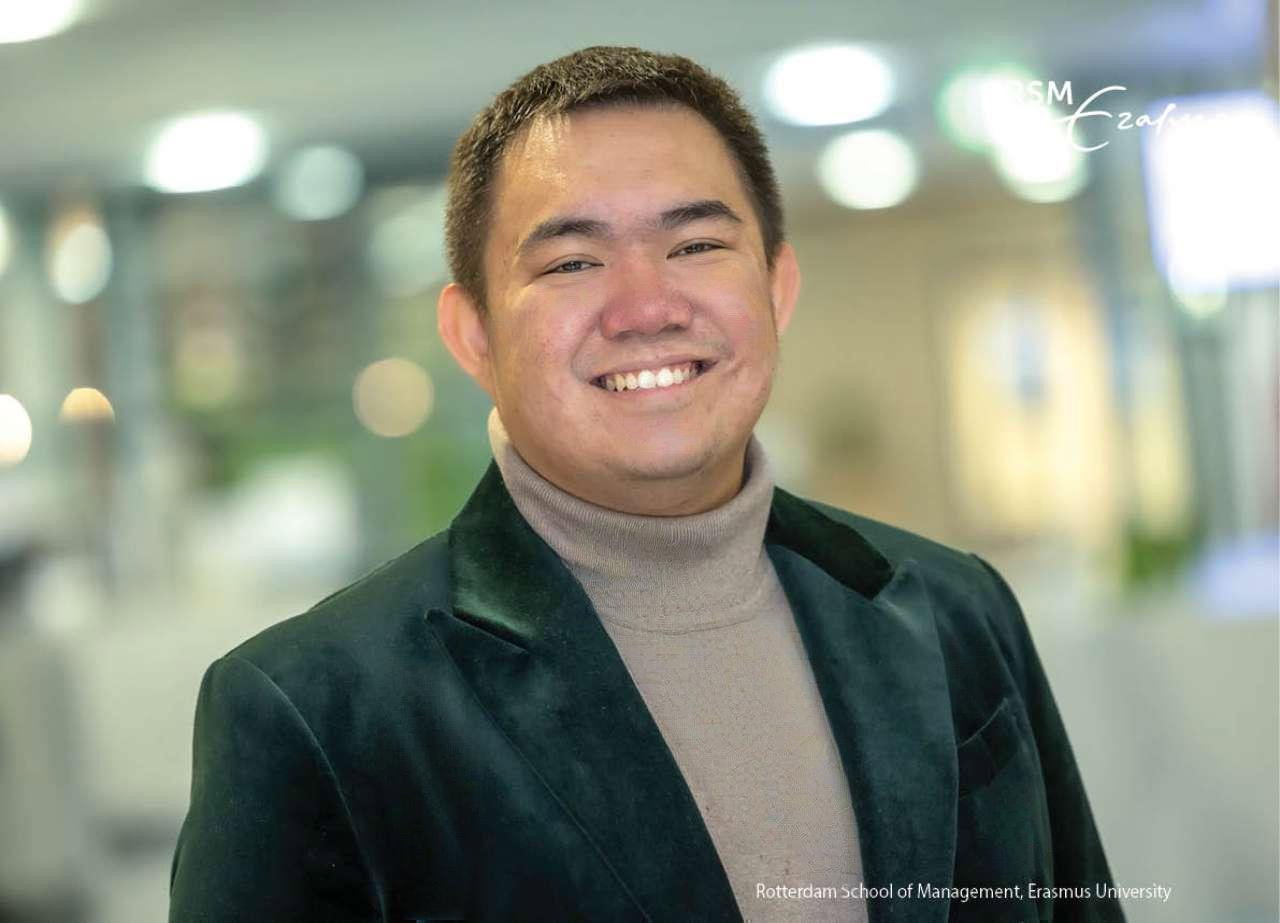
Today on Bibliophile Talks, I am delighted to welcome Irvin Embalsado, author of "A Particular Boy Among Air Particles". Born and raised in Antipolo City, Irvin began writing stories during his years at Ateneo de Manila Grade School. He spent the next two decades nurturing that passion alongside a diverse range of pursuits. Over the years, he has been a chemist, a materials engineer, a theatre enthusiast, and, in his own words, a corporate slave surrounded by more spreadsheets than Pokémon. While pursuing an MBA in the Netherlands, he finally returned to the dream he had carried since childhood—writing the stories that had long lived in his imagination. A Particular Boy Among Air Particles marks his debut novel and the first step into a world he spent years creating.
Thank you for joining us today, Irvin. Let's dive in!
1. Tell us about yourself. How did you develop your passion for writing, and what inspired you to become an author?
I. I was first inspired to write in 2005, after we read a short story titled “The Brave Three Hundred” in my third-grade English class. I later learned that it was about the Battle of Thermopylae, the same battle that inspired the film 300. I loved it so much that I wrote my own short story on pad paper called “The Fearless Seven.” I am ashamed to say that I do not remember what my first short story was actually about, but knowing myself, it was probably about seven Final Fantasy-esque heroes defeating an army of thousands.
The following year, I joined a school poetry-writing competition and somehow won with a poem called “The World of Books”, which I wrote on the spot. My school library framed and displayed it. Then my fourth-grade class moderator chose it as our choral recitation piece for a competition among the thirteen sections in our grade. Imagine other classes reciting poems by Shel Silverstein, and then we walk into the auditorium with a poem written by a fourth grader. GURL, in retrospect, it was WILD. I am sure there were grammatical errors in there, too, but that experience made me feel empowered to keep writing anyway. I even wrote another choral piece for my seventh-grade class.
I kept writing short stories until around 2011, though not very consistently. I wrote whenever my mind randomly produced an idea interesting enough to chase. I also attempted a novel at one point. I made it to three chapters, got discouraged because I felt I could not do it, and stopped writing fiction for a long time.
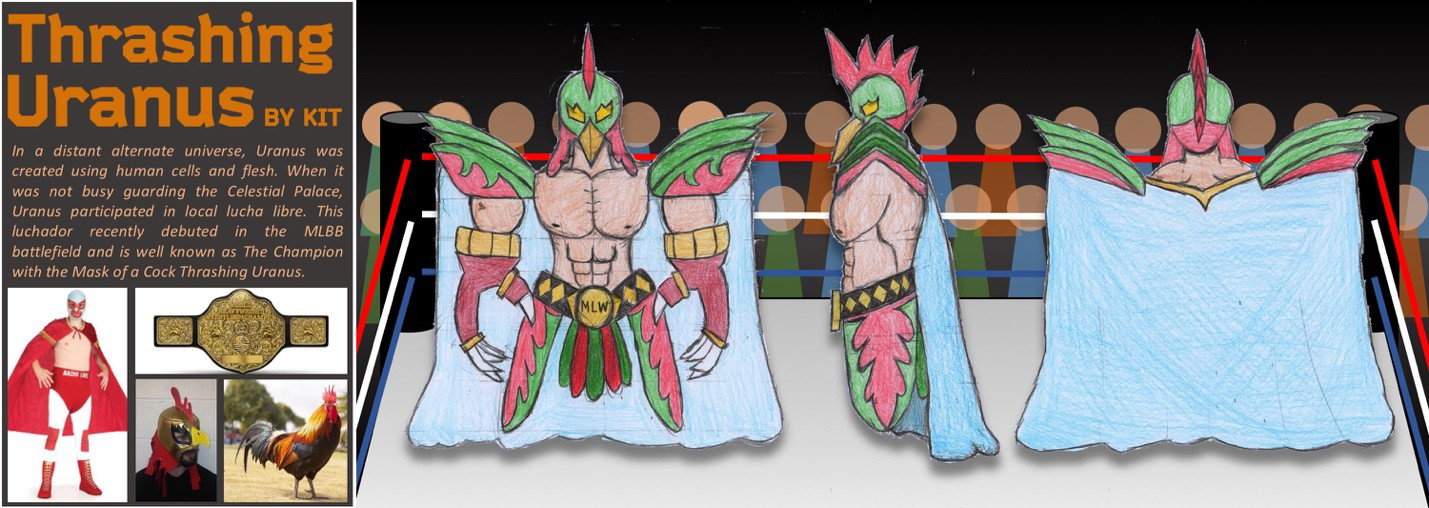
My love for storytelling did not disappear, though. It simply moved somewhere else. Theatre became my main creative outlet for around seven years in high school and college. I was often typecast as a king, but I had a naturally booming voice, so I did not mind. I also kept sketchpads full of character designs, even though my visual art skills are terrible, and I have made peace with that. I remember submitting six character designs, complete with lore and abilities, for Final Fantasy: Brave Exvius, along with a skin design for Mobile Legends: Bang Bang. None of them made the cut, but I was still hella proud of them.
I eventually returned to writing last year while pursuing my MBA. I suddenly had enough time to read more fantasy novels and thrillers than I had in years. I read thirty-five books in the past year, which is already a lot for me. At some point last September, I decided that I was finally going to write a novel again. I think it might’ve had something to do with my favourite author finally releasing a new book after eight years.
2. Congratulations on the release of your debut novel, “A Particular Boy Among Air Particles”. Could you tell us a little about the book and what readers can expect from this unique fantasy adventure?
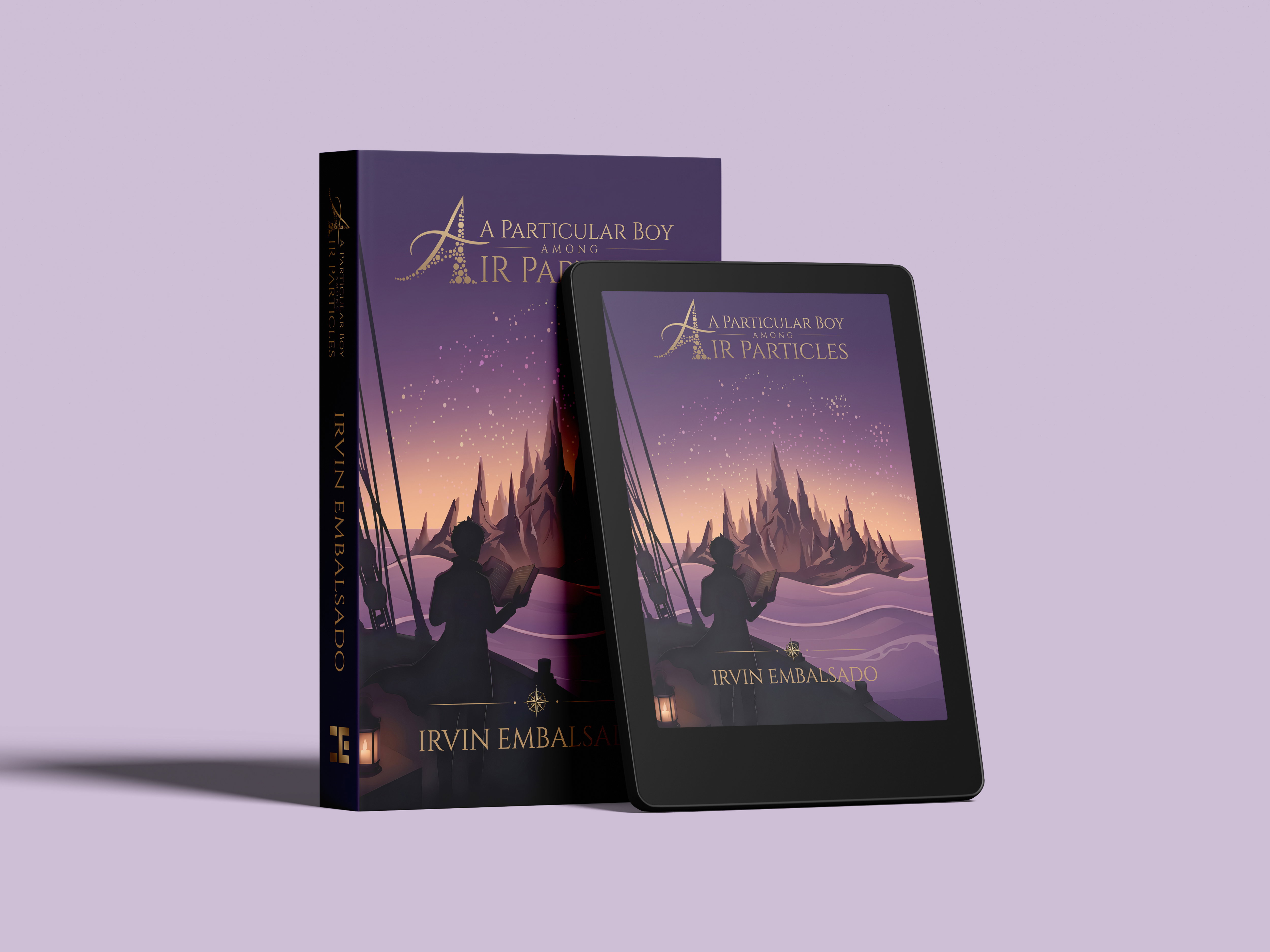
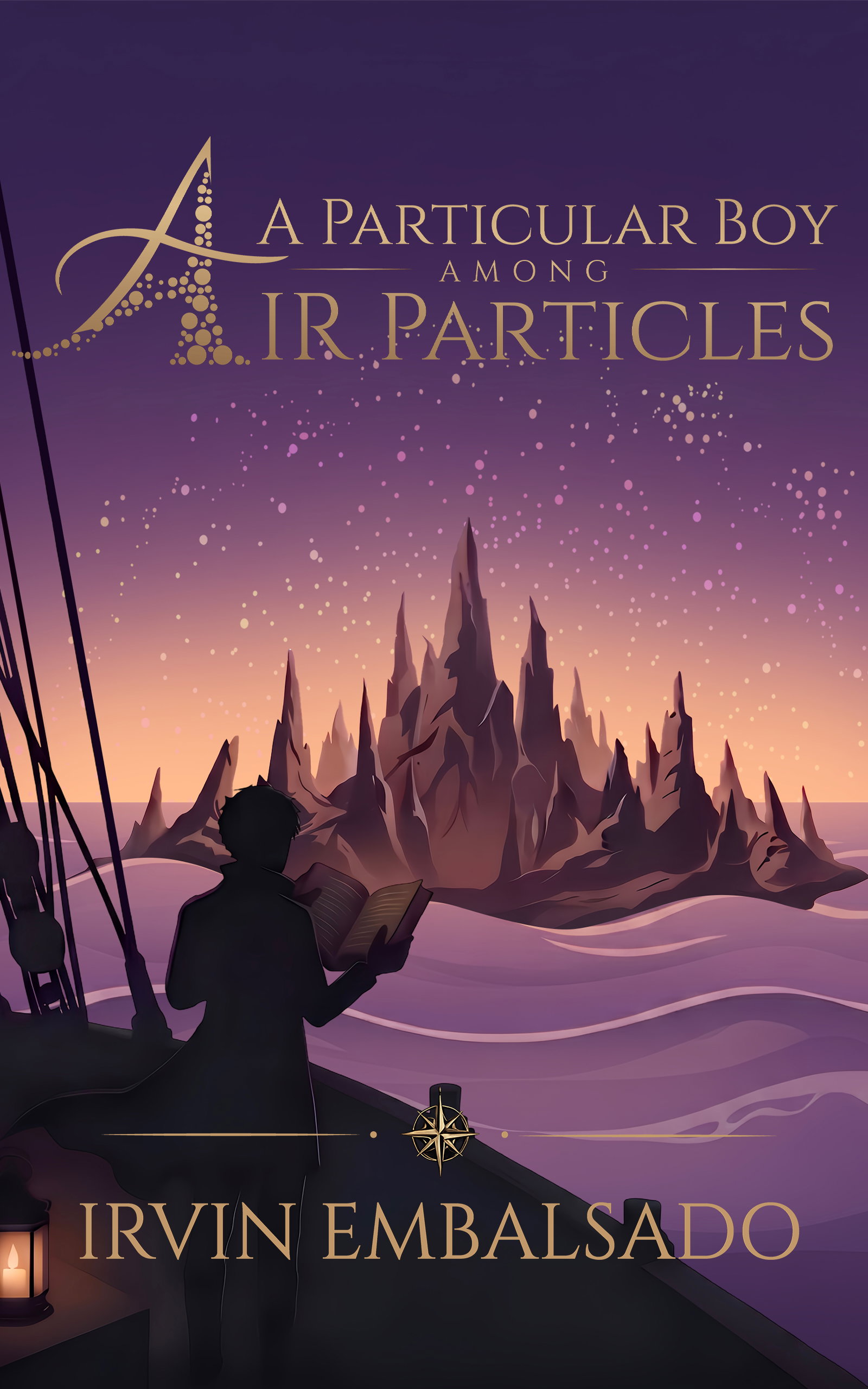
I. A Particular Boy Among Air Particles is a coming-of-age fantasy adventure about a boy who has mostly learned about his world by reading books inside his wardrobe. The wardrobe is literal, but yes, it is also very much about being in the closet.
Cielo lives in a world that believes itself perfect and stable, until unexplained tremors begin to rattle that certainty apart. Each civilisation is separated by calm seas, and almost no one travels because everyone believes their own little corner of the world already has everything it needs. There is a reason behind that worldview, and readers will discover it if they stick around long enough.
The only person who truly challenged it was a legendary explorer named Hankxr. Inspired by his journals, Cielo becomes the second person to travel across The Shell. At first, he expects to learn about culture and geography. What he discovers is far more mystical and far stranger (…and possibly tied to the end of everything).
This book is also a slow-burning mystery for readers who enjoy piecing things together alongside the main character. This may sound bold, but I really do want readers to get ready for Chapter 48. The worldbuilding, the personalities of different civilisations, the magic system, and the central mystery all connect through a Chemistry concept. The funny thing is, it is not an obscure topic that only people deep in the sciences would know. Anyone who has gone through middle school or high school science classes has likely encountered it. I am extremely proud of that because I have not personally read or heard of fantasy books that use this concept as a central design element. My ARC readers have consistently commented on the uniqueness of the idea, and I am overjoyed by that.
It is also a queer coming-of-age fantasy. Whenever I browse Kindle or ARC platforms like NetGalley, I feel like many queer-centered books are strongly tied to romance or spice. There is nothing wrong with that, but this book has neither, and I do think it fills an underserved niche. Cielo’s queerness is central to his internal struggles and to the way he relates to certain characters. Does he develop feelings for someone in the story? Probably. But it remains understated, which feels true to my own experience as someone who was closeted for nearly twenty-seven years.
There are also subtle Filipino references in the book that I hope will make Filipino readers chuckle a little. I wanted to include Filipino touches in a fantasy story that is not based on Philippine folklore, not set in the Philippines, and not populated by actual Filipino characters. I almost named one character Jonalyn because of this very modern Filipino experience that appears in the book. But GURL, can you imagine, say, LotR having characters named Aragorn, Legolas, Gandalf, and then someone called… Jennifer??? FREAKING JENNIFER?! So sadly, it was a no for Ms Jonalyn.
3. You have worked in fields ranging from chemistry and materials engineering to business. How have these experiences influenced your creativity and approach to storytelling?
I. My Chemistry background had a MASSIVE influence on this book. I do not want to give too much away, but there is a specific science concept that ties the worldbuilding, the magic system, and the mystery together. It is revealed around the eighty percent mark of the book, and it is the part of the story I am most proud of. I have not personally seen this concept used as the core design element in a book, web serial, video game, or movie. Gosh, I really do need readers to get to Chapter 48.
The book is also a slow-burning discovery, which is very much inspired by the scientific method. Cielo hypothesises and tests his ideas multiple times as he unravels a magic system that his world has practically never discovered. I open the book with the quote “Experiment trumps theory,” which my General Chemistry professor once said during a lecture. It lodged itself in my mind and never left. That idea matters to the story because Cielo constantly questions and challenges the worldview he inherited.
My business background helped differently. I once served as the local “KPI guy” for a global product pilot in an industry-leading multinational FMCG company. That role meant writing professional emails EVERY HOUR (no joke) to different business streams in the Philippines, top management in Switzerland, and our counterpart in Colombia, who was launching the same product after we introduced it globally. There was so much pressure to make my written and verbal communication clear. It reminded me that, at the very least, I could do formal writing properly. (Thank you, Lyka, for the mentorship and guidance, hehe)
More than my corporate background, though, theatre heavily influenced my storytelling. I focus a lot on blocking characters in scenes. Readers might notice that I tend to overly describe where a character looks, where they stand, or how they tilt their head. That is me being a kind of director and not just a writer.
I also had a brilliant professor who worked in consultancy and taught us the value of repetition in presentations. I tried applying that to fiction. Some ARC readers have since said I could trust the reader more and explain less, so maybe I will adjust that lesson next time. (Consultancy work is not fiction writing, apparently. Who knew HAHA)
4. Please tell us what you enjoy most about writing. What is your favourite part of being a writer?
I. My favourite part is the pre-writing phase, because nonstop ideation without the pressure of making those thoughts presentable is fun. I had a notebook full of concepts and possible plot points, and I simply had to choose which ones deserved to make it into the book. That stage felt chaotic in the best way.
5. What was the most challenging part of writing your debut novel?
I. Prose. Easily.
I don’t think I will ever feel fully confident about my writing or my grasp of language in general. I need lots and LOTS of editing, and I often have to CMD+F overused words and replace them with a synonym I just googled. Stephen King would probably give me a side-eye for my adverbs. I tend to repeat expressions too often, and Google Docs keeps underlining my prepositions in blue because apparently I enjoy choosing the wrong ones.
My default style is iterative writing. I know the first version will have errors, but I need to get the scene down first. Then I edit over and over again until the prose starts feeling readable. That process takes FOREVER.
6. Have you ever experienced writer’s block? How did you deal with it?
I. For this one? No, not really. I had so many ideas mapped out from world to world and scene to scene that the story came naturally in my head.
There were nights when I could write 1,500 words of dialogue and narration in less than an hour. The catch is that those 1,500 words were VERY rough. Lots of typos and errors (practically unreadable lol). Every hour of writing was immediately followed by three to five hours of preliminary editing for the first draft alone. So in terms of ideas, the process was free-flowing. But yeah, making those ideas presentable was a different beast entirely.
7. What do you like to do when you’re not writing?
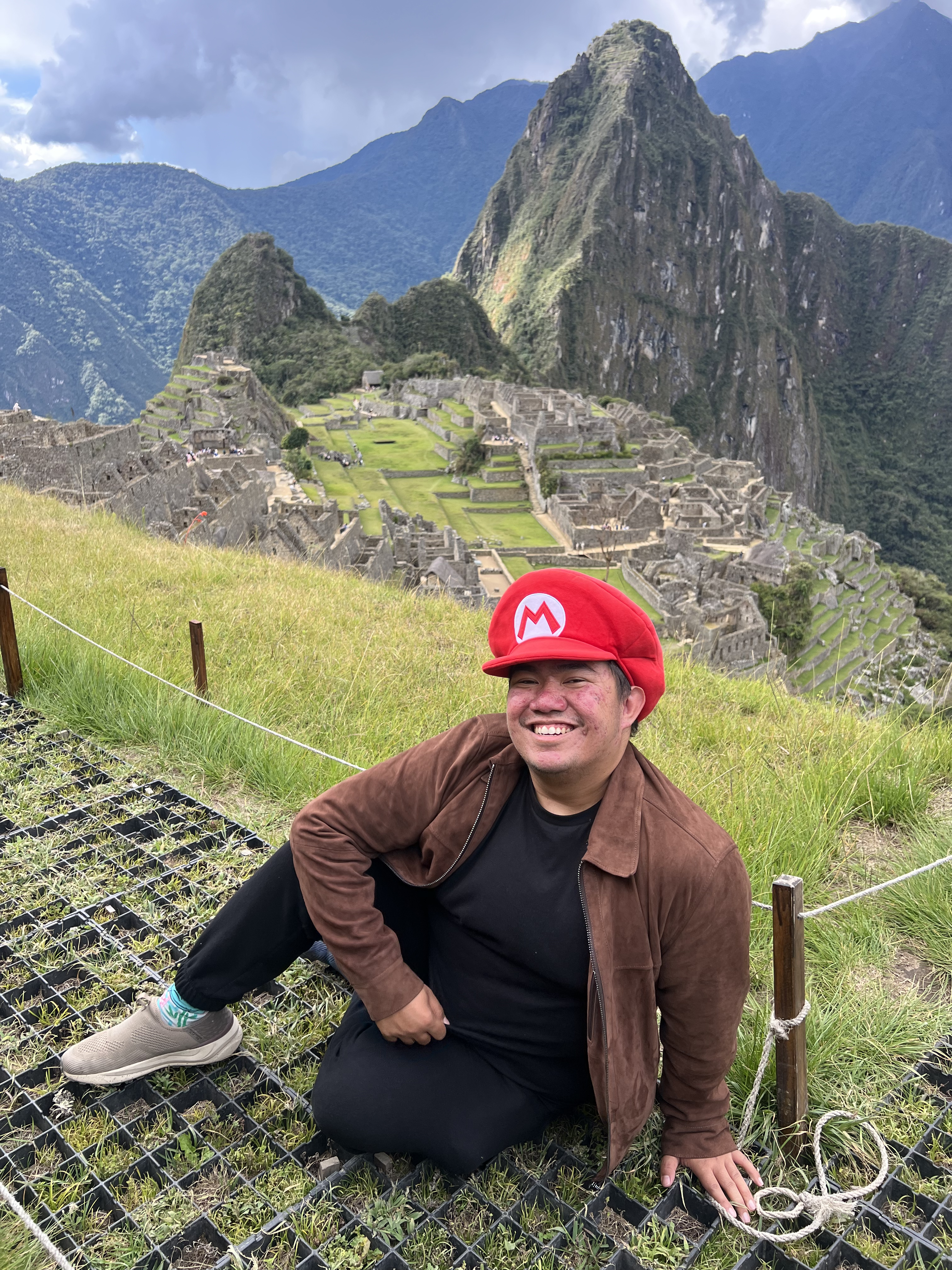
I. Travel! I was able to visit thirty-seven countries across five continents in 2025 alone. I remember writing some of my first chapters during train rides on my Central and Eastern European trip last November. One of the books I read in October was set in Prague, so I went there and created my own solo tour of locations from that book. I was trying to hype myself up with the thought that I would be releasing a book of my own soon.
I have also been lowkey obsessed with Broadway. In the past year, I watched thirteen shows in New York and four in London (and a few more in Amsterdam and in Manila). I love sitting in the front row, so seeing high-profile actors like Lea Michele, Jake Gyllenhaal, and Denzel Washington, Darren Criss, Bob The Drag Queen, Jonathan Groff, Nick Jonas, and Michelle Williams up close was euphoric. (I swear, spit landed on my face, sitting in the Can-Cans watching Moulin Rouge!) Theatre has always been one of the places where storytelling feels most alive to me.
8. What is your real-life work schedule like when writing? How many hours a day do you write?
I. I started writing the book about six months before graduating from my MBA. Our core classes were done, and we mostly had electives left. The workload was intentionally lighter, so students could pursue internships, but I decided to write and travel more instead.
In the two to three months after graduation, I went on overdrive. I would literally write from the moment I woke up until I fell asleep. The most I wrote in one day after graduating was fourteen hours, and I remember timing it. I think part of me needed proof that I had really spent that much time writing.
9. Where do you get your idea for your debut book?
I. I have had ideas for lore and stories floating around in my head for several years. I am a huge JRPG fan, and Xenoblade Chronicles subconsciously influenced how The Shell came to be. Earlier mainline Final Fantasy games also influenced my love for maritime travel in fantasy, especially in the latter half of the games, once ships and airships were unlocked.
I first thought of parts of the magic system about a decade ago while finishing my Chemistry degree. But to be perfectly honest, the specific Chemistry concept that eventually shaped the book came back to me randomly while I was brute-forcing story ideas in my notebook. Initially, the book was more focused on the wardrobe, and somehow it started sounding like Narnia. Then I remembered particular air particles, and that felt much more exciting. I liked the latter better. (Much betta! -Baga Chipz)
10. What aspect of writing “A Particular Boy Among Air Particles” did you find the most challenging—developing the characters, crafting the settings, or bringing the adventure to life on the page?
I. I had the characters and the world fully developed in my mind, but the challenging part was deciding how deep to go on the page without dragging the pacing too much. Several ARC readers have had mixed reactions to the worldbuilding. Some found parts lacking. Some wanted more. Some felt the world was too improbable. I understand those reactions because I did resort to shortcuts in places to keep the story from becoming annoyingly dragging.
That balance was hard. I wanted to describe every continent in greater detail, but I also did not want the book to become a giant travel encyclopedia with a pinch of storytelling. Alongside prose, that was probably my biggest challenge.
11. What kind of research do you do, and how long do you spend researching before beginning a book?
I. I did not measure how long I spent researching, but I did revisit scientific references because I wanted to inject real concepts into the book. Many of the ideas were already formed when I was in college, but I still checked credible sources online before writing. There were a few inconsistencies where I let artistic license win, because at the end of the day, this is still fantasy. Science was invited to the party, but it did not get to control the entire playlist.
The biggest form of research I did, however, was reading novels while writing. I read T.J. Klune’s The House in the Cerulean Sea to study subtlety and restraint in a queer emotional dynamic within a more whimsical fantasy setting. After reading ARC comments about over-explanation and trusting readers more, I now think I should probably have read Le Guins A Wizard of Earthsea earlier.
12. What are your favourite literary journals? What books or authors have most influenced your own writing? Share some of your favourite books with our readers.
I. Oh no. My favourite author is somewhat notorious among readers, so I will not name him outright. I did hint earlier that I went around Prague after reading his latest release. Another clue is that I wore a Mickey Mouse watch from December 2016 to November 2020 because his most popular character had one.
He was my first major influence when I started writing this book, even though our genres are not exactly the same. The first drafts of my opening chapters were very short because I wanted rapid pacing. I wanted the book to feel unputdownable. As the story developed, though, I moved away from that and leaned into a slower fantasy mystery (or at least I felt like it was still fast-paced, but then my ARC readers said otherwise). I still think Chapters 4 and 5 could’ve been left as one chapter, but I just ended up leaving them as they were.
I eventually took the most influence from Brandon Sanderson’s Tress of the Emerald Sea. One of my ARC readers pointed out that Cielo felt like a mix of both Tress and Charlie, which amused me because I didn’t see it until they mentioned it. Cielo sneaks away from his homeland on a boat like Tress, but he also rejects a predetermined life involving girls, like Charlie. I binged ten Sanderson books between writing sessions, though my first introduction to him was through the Infinity Blade novellas in the early 2010s.
13. Which did you find more challenging—writing the book itself or the publishing process?
I. The publishing and self-marketing process was harder BY FAR.
Writing and editing took eight months, but I gave myself less than a month for self-marketing. That was painful. Since the book is self-published through Amazon KDP, I had to commission the cover art and interior layout myself from artists I found on freelancer sites. That alone was rocky. I encountered scams and received AI slop a few times, even after paying for contracts. It was stressful, but I eventually found someone who could give me a respectable product with Photoshop and Illustrator source files as proof.
The self-marketing part seemed easy at first. I uploaded the book to ARC platforms like NetGalley and Booksprout, then posted the links across communities on Reddit, Facebook, and Goodreads. Then came the harder part: contacting influencers and potential collaborators on Bookstagram and BookTok. I even attempted to Matt Dinniman my way to success by posting on Royal Road and other web serial sites. I definitely rushed the whole process, which made publishing more painful than it needed to be. I am carrying that lesson forward into my next book, whenever that may be.
14. Did you discover anything about yourself during the process of writing and publishing this book?
I. It confirmed that I still feel deathly insecure about prose and just venturing into writing lol. To be perfectly honest, I’d rather have strangers read my book than people I’ve met throughout my life but haven’t spoken to in years. I’ve been hiding this project from people (minus family and close friends) for MONTHS, and I just might deactivate FB soon after launch because I’ve gotten tagged in posts that I DON’T WANT MY FB CONTACTS TO SEE, and I think that will only get worse once the book gets launched. Or maybe I’ll just make a new account. Crap, I should’ve done that from the beginning.
I wanted to gouge my eyes out whenever I read books between writing sessions because I kept comparing my prose to that of more experienced authors. Heck, other self-published debut authors are MILES ahead in terms of prose. (My Gyarados, I’m not selling myself with this interview, am I?)
But you know what? I’m playing the newbie card, and putting myself out there is simply how I’ll learn.
15. Were there any scenes, locations, or characters that surprised you as the story unfolded?
I. I wouldn’t say anything surprised me in a major structural way because I had planned most of the novel before writing it. What did surprise me was how naturally some of my general interests slipped into the book. There are Easter eggs related to Top Model, RuPaul’s Drag Race, Pokémon, Eurovision, Final Destination, and a few other things. The references just presented themselves as I went along.
16. How can you strike a balance between presenting information to the reader effectively and ensuring their needs are met?
I. This is something I am still learning. For now, I want to listen carefully to reviews and feedback before speaking too confidently about what those readers' needs are. I care a lot about clarity, but I am also learning that clarity and over-explanation can sit very close to each other.
17. Do you try more to be original or to deliver to readers what they want?
I. I have always made eccentricity and creativity part of my personal brand, so I usually go for what feels genuinely unique and original to me. Honestly, the first person I try to please is myself. If I am not excited by the idea, I don’t think I can sustain the energy needed to write the book.
That said, I do hope readers enjoy my novel. It has been heartwarming to receive praise from ARC readers, and I hope more people connect with the book once it is out.
18. Share some advice for aspiring authors. What advice would you give to your younger self?
I. To be completely frank, I do not think I am in a position to give sweeping advice as a debut author. My advice to my younger self, though, would be to let life take him in different directions. Well, that actually was the case for me these past two decades, and I somehow still found my way back to writing. All those detours gave me experiences I could eventually draw inspiration from.
19. If you could spend a day with any character from your novel, who would it be and why?
I. I am gay, so O.G. No further comment.
20. What's next for you as an author? Can readers expect more stories set in this world or entirely new adventures in the future?
I. I do have sequels mapped out for A Particular Boy Among Air Particles, but I feel like I may want to write a different standalone book first. The book is tentatively titled The Terracotta Play. It leans more into theatre than science, though it will probably still carry some Xenoblade Chronicles-inspired energy because apparently I cannot escape that influence.
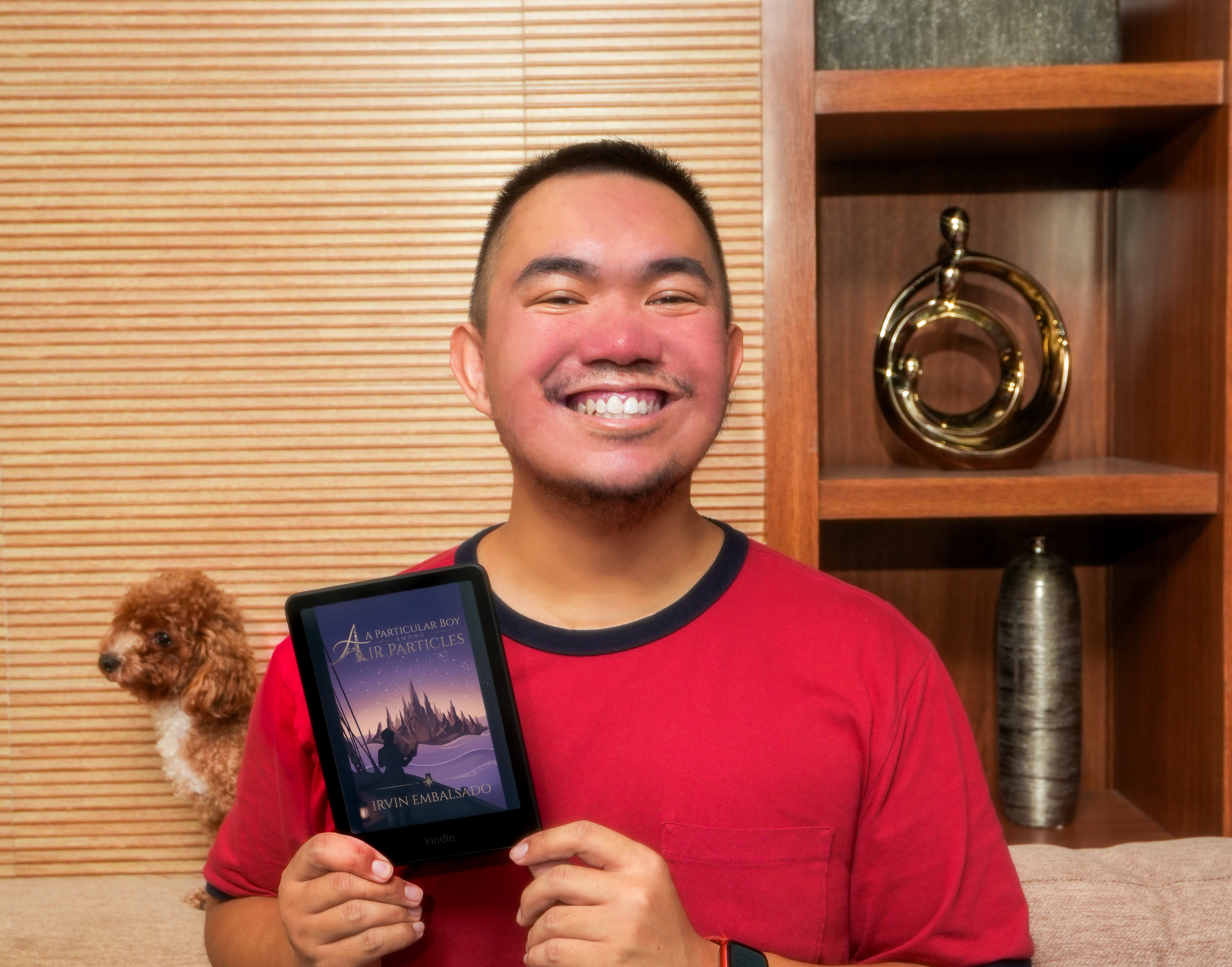
Thank you, Irvin, for taking the time to answer these questions. It has been a pleasure learning more about your writing journey, the inspirations behind A Particular Boy Among Air Particles, and the imaginative world you've created. We wish you every success with the novel and look forward to seeing what comes next.
Connect With Author Irvin Embalsado:
Instagram: https://www.instagram.com/YouForcedMeTo
Facebook: https://www.facebook.com/irvin.embalsado
Website: https://irvinembalsado.com/