Exclusive Author Interview with Jobert Abueva | Author of The Janus Plan
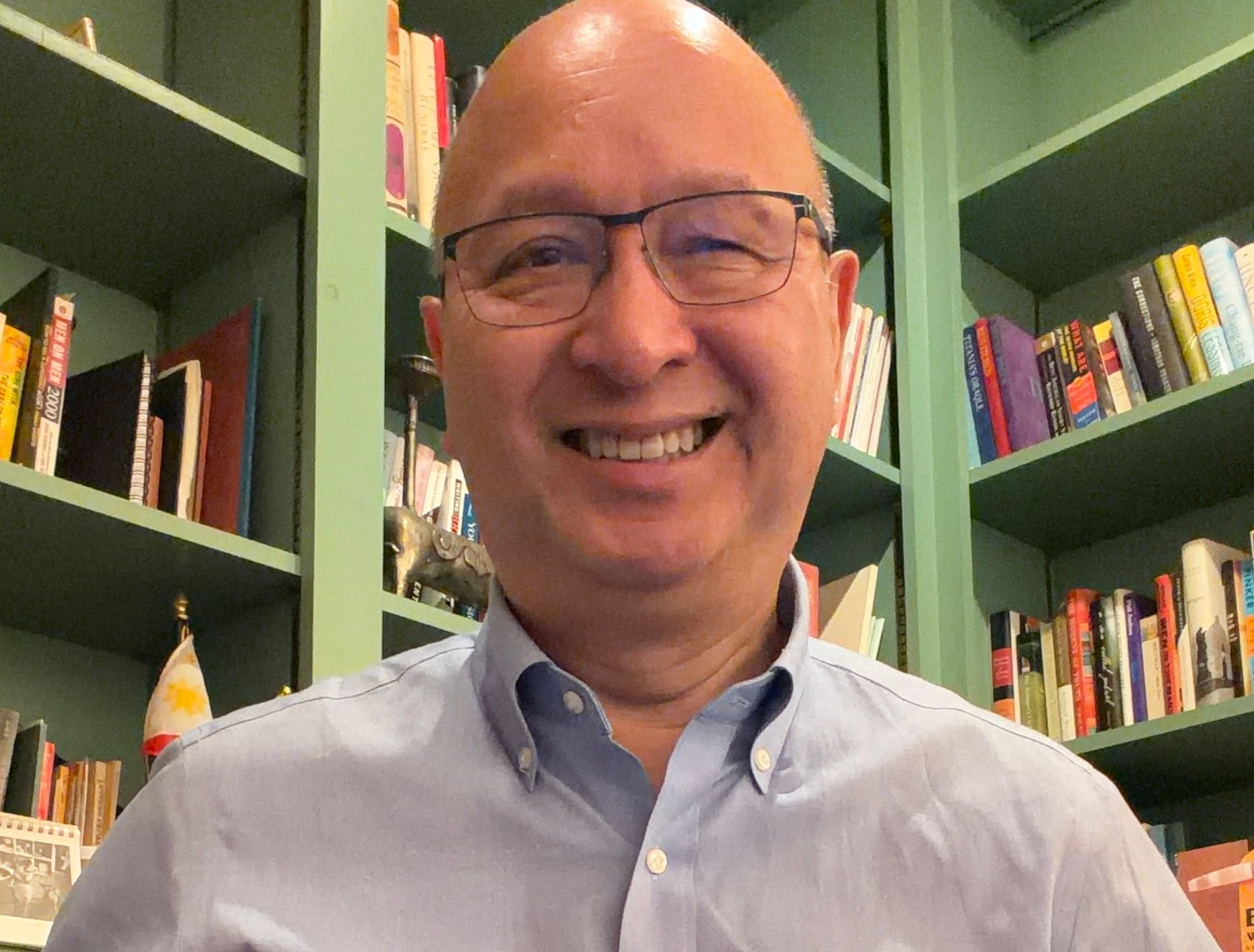
Some authors write stories. Others inspire transformation. Jobert Abueva does both.
Born in the Philippines and raised across Nepal, Thailand, and Japan, Jobert's life has been shaped by cultures, languages, and experiences that few people encounter in a lifetime. From earning degrees at the University of Michigan and Columbia Business School to leading global marketing initiatives across four continents, his professional journey is as remarkable as his literary career. His acclaimed memoir, Boy Wander, earned multiple honours, including the Lambda Literary J. Michael Samuel Prize. At the same time, his essays and journalism have appeared in renowned publications such as The New York Times, Fortune, Entrepreneur, and The Philadelphia Inquirer.
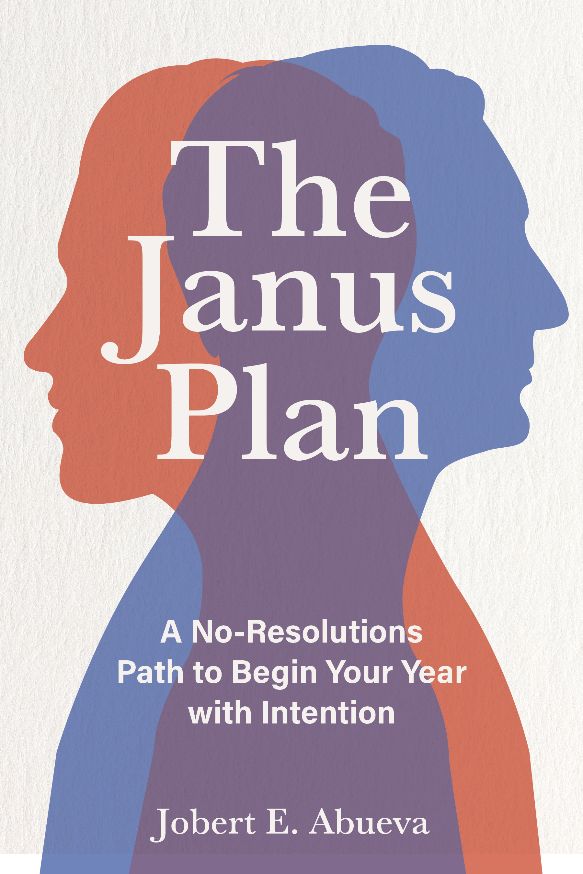
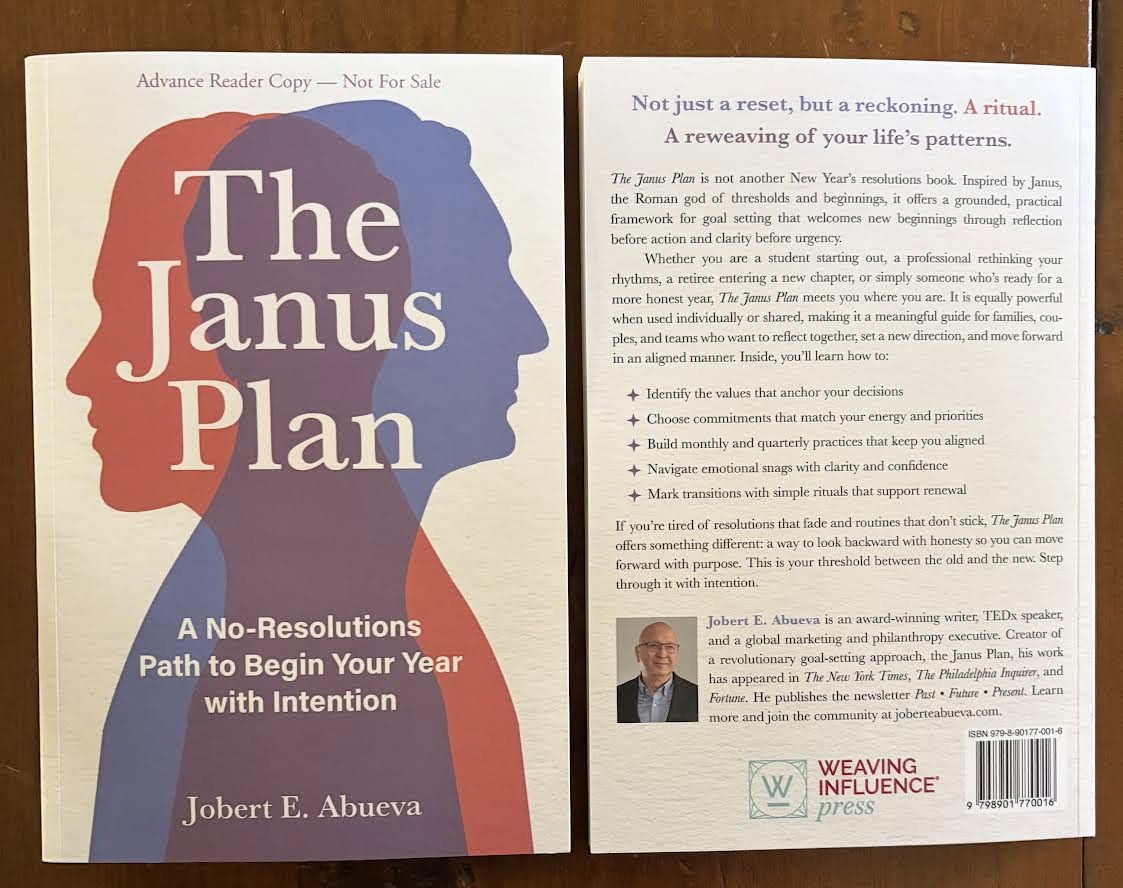
Now, with his latest book, The Janus Plan, Jobert combines personal reflection, storytelling, and practical wisdom to encourage readers to embrace intentional living rather than fleeting resolutions. The book invites us to pause, reflect, and move forward with greater clarity, compassion, and purpose.
In this exclusive conversation with Bibliophile Talks, Jobert Abueva shares the stories behind his books, the influence of his multicultural upbringing, his writing routine, favourite authors, life lessons, and the philosophy that continues to shape both his work and his life.
Let's step into the world of an author who believes every ending can also be a meaningful new beginning.
1. Please tell our readers a little about yourself and your journey as a writer.
J. My mission is to give people permission to stop long enough to look honestly at where they have been so that every new beginning they make is built on something real. That is how it has been for this son of a university professor whose work took our family across multiple cultures. I have always lived in between: between languages, between identities, between the person my world expected me to become and the person I was quietly becoming in the spaces those expectations could not fully contain.
Writing found me early. I kept diaries and wrote stories. My first published piece was a poem at age seven, which tells you everything about where this was always headed. When I landed in the United States for college, I then built a career in global marketing after graduate school, writing stayed with me through everything, including the burnout in my thirties that eventually produced both books. My memoir, Boy Wander (Rattling Good Yarns Press), was published in 2023, and The Janus Plan: A No-Resolutions Path to Begin Your Year with Intention (Weaving Influence Press) arrives this fall. Both books tackle the same essential theme: finding out who you actually are when you stop performing who you are supposed to be.
2. Having lived in the Philippines, Nepal, Thailand, and Japan during your formative years, how have these diverse cultural experiences influenced your identity, worldview, and writing journey?
J. Growing up across four Asian countries before the age of eighteen gave me something I could not have gotten any other way: the experience of being permanently in between—a foreigner everywhere and at home nowhere, and eventually, surprisingly, at home everywhere.
What that experience produced in me is a deep instinct for the threshold. The doorway between one way of being and another. Every culture I grew up in had its own way of marking those doorways. Nepali Dashain is the festival that honours what has been before, celebrating what comes next. Thai Loy Krathong, the festival of light, taught me something I would not have words for until decades later. Thais float small lotus-shaped baskets on rivers, each carrying a candle and their troubles, grudges, and grievances of the year. You release what you are carrying before you step into what comes next. The Japanese Oosoji is the great end-of-year cleaning before the new year. I absorbed these traditions as a child before I had language for what they were doing.
The Janus Plan is the book that eventually grew from those childhood absorptions. The framework I built to look honestly backwards before committing to what comes next is not something I invented.
3. Congratulations on the release of The Janus Plan! What inspired you to develop this unique six-step framework, and what do you hope readers will take away from it?
J. The framework grew from a question I could not stop asking after my burnout in 1997: why do we keep starting each year in the same wrong place of making resolutions that keep breaking?
I was running Clairol Herbal Essences, a haircare brand literally built on sensory joy, while feeling none of it due to overwork and a complete lack of care for my own well-being. One morning, I woke up in a Hong Kong hotel room, unable to get out of bed. What I eventually discovered is that I had been setting goals for every year ahead without ever honestly examining the year behind me. New commitments on top of unexamined old ones. The same patterns carried forward because I never stopped to ask what the year had actually been trying to teach me.
It is named after Janus, the ancient Roman god of beginnings, endings, and transitions. I first came across him at age nine in an Encyclopedia Britannica my family owned. I was transfixed by his two faces: one looking to the past and the other to the future. His image stayed with me and resurfaced when I reassessed my career and wellbeing after that Hong Kong episode.
That question, what did this year actually try to teach you, became the foundation of everything. The six steps grew from three decades of answering it honestly, year after year, and watching what became possible when I did.
I hope readers sit with the prompts and exercises honestly, writing out real answers before their next new beginning. To understand the true lessons of the past year and have them inform sustainable goals in the new year. Not a wish list. A genuine reckoning. That is the whole thing.
4. Was there a particular life experience or turning point that made you realise it was time to write The Janus Plan?
J. The Hong Kong hotel room incident (which was an emotional breakdown) was the turning point that eventually produced the framework. But the turning point that produced the book was quieter and came much later.
During the COVID pandemic, I found myself facilitating the practice informally, in conversations with friends and colleagues who were navigating profound uncertainty about what came next. And I kept watching the same thing happen: the moment someone answered the question honestly, “What did this year actually try to teach me?” something unlocked. Not immediately, but over time. A clarity arrived that no amount of forward-facing goal-setting had produced.
I realised the practice was not mine. It belonged to anyone standing at a threshold. And if it belonged to anyone standing at a threshold, it needed to be a book.
5. How did writing a deeply personal memoir differ from writing a practical self- help book?
J. The memoir asked me to excavate. The self-help book asked me to build.
Boy Wander required going back into experiences I had not fully processed, childhood crossings, identity negotiations, the particular loneliness of being the perpetual newcomer trying to understand himself, and finding the truth in them rather than the comfortable narrative I had constructed around them. It was emotionally demanding in a way that surprised me, even though I had lived every moment of it.
The Janus Plan required a different kind of discipline: translating something I knew deeply and personally into something useful and accessible to someone I would never meet. The challenge was not honesty but clarity. The framework had to work without me in the room explaining it. That constraint produced a better book, I think, than I would have written if I had been able to rely on my own presence to fill in the gaps.
6. Have you ever experienced writer’s block? How did you deal with it?
J. Yes, quite regularly. And I have come to believe that what we call writer's block is almost always a different problem altogether.
When I cannot write, it is usually because I have not yet told myself the truth about what I am trying to say. I am circling something that needs to be said plainly, but that I am not yet ready to say plainly because it is painful or embarrassing, perhaps too vulnerable. The block is not a writing problem. It is an honesty problem.
My solution is to stop trying to write the piece and start writing toward it. A journal entry. A letter to no one. The thing I am not ready to say, said badly in private. Almost always, somewhere in that mess, is the sentence that unlocks everything.
7. Is there one country or experience that fundamentally changed the way you see the world?
J. My five years in Japan during middle school and high school changed me most profoundly, in ways I am still accounting for.
There is a concept in Japanese aesthetics called ma: the meaningful negative space between things. The pause between notes that gives music its shape. The emptiness in a room makes the objects in it visible. Ma teaches you that what is not there is as important as what is.
I absorbed that concept as a teenager without knowing I was absorbing it. It became the way I think about transitions, about thresholds, about the in-between spaces that most people try to cross as quickly as possible. The Janus Plan is, in some ways, an application of ma to personal and professional life: the space between what you have been and what you are becoming is not empty. It is where the most important things happen. Do not rush through it.
8. What was the most rewarding — and the most challenging — part of writing a book?
J. Most rewarding: the moment a paragraph finally says exactly what I have been trying to say for weeks. There is a specific feeling when language lands precisely on truth. I write for that feeling. Everything else is in service of that moment.
Most challenging: the middle. Every book has a middle, the long stretch between the excitement of beginning and the relief of finishing, where you are not sure the thing is working, and you cannot see either end clearly. The middle of The Janus Plan was particularly difficult because the framework had to be both deeply personal and immediately practical, and holding those two registers simultaneously without losing either one took longer than I expected.
9. What has been the most difficult part of your writing journey, and how did you overcome it?
J. Learning to trust that my story was worth telling, and that the practices I have adopted are worth sharing. What overcame it was not confidence. It was a reader of an early draft who told me, "The parts where you disappear are the parts where I lose the thread." That sentence rearranged something in me. Being present in the work, fully and honestly in my own voice, was not self-indulgence. It was a gift to the reader. Once I understood that, the writing changed.
10. How do you personally reset and refocus when life doesn't go according to plan?
J. I ask the question. Not "why did this happen" or "what should I do next". The question from The Janus Plan: What is this actually trying to teach me?
That reframe, from life-as-happening-to-me to life-as-teacher, does not make difficult things easier. But it makes them purposeful. And purposeful difficulty is something I can navigate in a way that random chaos is not.
I also call one person, a confidant whose judgment I trust completely, and say what is true out loud. Speaking it changes it. There is something about giving language to experience that rearranges it into something workable.
11. Which authors have had the greatest influence on your writing style or way of thinking?
J. There are several authors whose work has shaped how I think and how I write, but there is one I met at a book signing who, when I told him I wanted to write, offered me the wisest possible advice: Jobert, go write. I am talking about Edmund White, who passed away last year. He wrote with the courage of the examined life. His ability to write about queerness, desire, and identity with total honesty and total literary ambition gave me permission to believe that my coming-of-age story was not a footnote to someone else's literature but a story worth its own full attention.
12. If you could recommend three books that have profoundly impacted your life, what would they be, and why?
J. The Artist's Way by Julia Cameron, because it was the first book that gave me a structured practice for accessing honest creative expression rather than performed creative expression. The morning pages discipline Cameron prescribes, demanding as it is to follow consistently, is a close cousin of the Stitch Notes and ThoughtThreads exercises in The Janus Plan. Both trust that honest writing, done without an audience, unlocks what no amount of inspired effort can.
The Remains of the Day by Kazuo Ishiguro, because Stevens, the butler who has spent his entire life in the service of a false idea of dignity, is the most heartbreaking portrait I know of what happens when a person reaches the end of their life and realises they never stopped to ask what the years were actually trying to teach them. The Janus Plan begins where Stevens's story ends, at the moment of honest reckoning that could have changed everything.
A Little Life by Hanya Yanagihara, because it is the most unsparing examination I have ever read of what happens when the past is never honestly processed before attempting the future. Jude St. Francis tries to build a life forward while carrying everything backwards without examination, without release, without ever asking what the years of damage were trying to teach him about what he needed rather than what he feared. The book broke me. It also clarified something I had been trying to articulate for thirty years: the cost of skipping Step One, Ponder the Past, is a way of life. The Janus Plan begins where Jude's story could have begun, with the honest look back that might have made everything that followed more survivable.
13. Is there a particular chapter in The Janus Plan that feels especially personal or meaningful to you?
J. The chapter on Step 1: Ponder the Past is the one I return to most often myself.
It contains the exercise I developed in the two years after my Hong Kong breakdown, when I sat with a notebook and tried for the first time to honestly account for what the previous years had been trying to teach me. What emerged- the three themes of validation hunger, exhaustion debt, and misaligned purpose- was not comfortable. But it was true. And the honest naming of those themes was the beginning of everything that followed.
That chapter is the most personal because it is the most vulnerable. It asks readers to do what I had to learn to do the hard way: look honestly at what has been there without flinching.
14. What advice would today's Jobert give to his younger self?
J. Stop trying to be credible and start trying to be honest. Credibility is what other people give you. Honesty is what you give yourself. Everything you actually want is on the other side of honesty, not credibility. The writing that matters. The relationships that sustain you. The work that feels like yours.
Also, the in-between spaces are not the problem. They are the education. Stop trying to cross them as quickly as possible.
15. What advice would you offer aspiring authors who dream of publishing their first book but are afraid to begin?
J. Begin badly. The fear of beginning is almost always the fear of producing something imperfect. Write what Anne Lamott calls the shitty first draft in her essential craft book Bird by Bird. Write it knowing it is bad. The bad draft is not the failure. It is the raw material.
Find one reader whose judgment you trust and whose encouragement you believe. Not someone who will tell you it is wonderful no matter what, but someone who will tell you when it is not working and why. That reader is worth more than any writing course or craft book. If that reader does not yet exist in your life, a writing group is worth finding.
Do not wait until you have something to say. You already have something to say. The writing is how you find out what it is.
16. If you could leave our readers with one message about living intentionally, embracing change, or pursuing purpose, what would it be?
J. The most important question nobody ever asks is also the simplest one.
What did this year actually try to teach you?
Not what did you accomplish? Not where did you fall short? What did the experience of living this specific year, with its difficulties and its graces, its surprises and its silences, try to reveal about who you actually are and what you actually value?
Sit with that question before your next beginning. Write honestly. Let what you find there, not the wish list, not the aspirational version of yourself, be the foundation for what comes next.
Any time of year. Any threshold. On purpose.
Rapid-Fire Round:
• One country that will always feel like home? – The Philippines
• Morning writer or Night writer? – Break of dawn
• One destination still on your travel bucket list? – Easter Island
• One word that best describes The Janus Plan? - Fulfillment
• Complete this sentence: A life well lived is...one honestly examined, not at the end, but all the way through.
Jobert Abueva’s journey is a powerful reminder that life’s transitions, pauses, and even difficult moments can become meaningful teachers when we take the time to examine them honestly. From growing up across different cultures to navigating a global career and finding his voice as an author, his experiences have deeply shaped the way he approaches identity, purpose, and personal growth.
Through The Janus Plan, Jobert encourages readers to look back before rushing toward the next beginning—to understand what the past has taught us and allow those lessons to shape what comes next. His reflections on writing, creativity, life transitions, and intentional living offer an inspiring perspective for anyone standing at a personal or professional threshold.
Perhaps the most memorable takeaway from our conversation is his simple yet profound question: “What did this year actually try to teach you?” Rather than measuring a year only by accomplishments or failures, Jobert invites us to look deeper—to recognise what our experiences reveal about who we are and what we truly value.
A heartfelt thank you to Jobert Abueva for joining us at Bibliophile Talks and for sharing his experiences, insights, reading recommendations, and writing wisdom with our readers. We wish him continued success with The Janus Plan and his future literary endeavours.
Before you begin your next chapter, perhaps it is worth pausing for a moment and asking yourself: What has this year been trying to teach you?
Connect with Author Jobert Abueva:
Instagram: https://www.instagram.com/joberteabueva/
Website: https://joberteabueva.com/
Facebook: https://www.facebook.com/joberteabueva/
LinkedIn: https://www.linkedin.com/in/jobertabueva